


Blog
Chinese kites have a long history and superb skills
Chinese kites have a long history and superb skills, which have long been recognized by the world. But when it comes to serious research, there is not much detailed information about Chinese kites, and even less information specifically about the specific techniques of Chinese kites. According to Chinese legend, Cao Xueqin's "Nanyao Beiyuan Kaogong Zhi" is a monograph that describes Chinese kite skills. However, not only has the full text of this book not been seen, but there is also a lack of sufficient supporting evidence to determine whether this claim is true or not, and whether Cao Shi did indeed have the collection of works by Fei Yizhai. The academic community is still debating and there is no conclusion.
In addition, there are some popular music charts. As legend has it, Emperor Huizong of Song's "Xuanhe Kite Manual" is an earlier book, but it has not yet been seen. The rest are spectra collected by various kite families or individual kite players, and some can still be found. Although these notation styles in China have their own limitations, they are still valuable materials. It is worth mentioning that the book "Kite Genealogy" written by Jin Tie'an in the 1930s is more valuable, but the drawback is that there are no illustrations, which may be due to the limitations of printing and publishing conditions and funding at that time.
In addition to "pu", China also has a valuable physical material called "tiao", which refers to the standard bamboo strips used to make a certain type of kite skeleton. This is usually passed down from generation to generation in families that produce kites in large quantities. For example, the "Kite Ha" family in Beijing has a bundle of "tiao" that has been passed down for several generations. This supplements the shortcomings of the "spectrum" that only has images without a skeleton or only a skeleton without specific variations in the size and thickness of bamboo strips, making the transmission of kite skills more complete. In addition to words, pictures, and physical objects, the teaching of Chinese folk crafts mainly relies on "oral transmission", which is the "technique" used among folk artists. This is a "trick" or "cut" used for easy teaching, memorization, and confidentiality. Due to the limited cultural level of artists, these singing techniques or incisions often have sounds but no words, or words that are intangible, resulting in many losses, modifications, and errors in circulation. The discussion on kite flying skills in China is mainly based on the aforementioned traditions. The limited cultural heritage serves as a reference for historical background, based on the existing traditional Chinese kites, and analyzed using scientific craftsmanship and principles of flight mechanics. It is hoped that it can provide some reference for the promotion and development of Chinese kite skills in the future.
The traditional Chinese kite techniques can be summarized in four words: tying, pasting, painting, and flying. Abbreviated as "Four Arts". Simply put, these "four arts" refer to setting up frames, pasting paper, painting flowers, and flying kites. But in reality, the connotations of these four characters are much broader, almost encompassing all the technical content of traditional Chinese kites. Zha "includes: selection, splitting, bending, cutting, and joining. 'Paste' includes: selection, cutting, pasting, edging, and proofreading. Painting "includes: color, background, drawing, dyeing, and editing. 'Release' includes: wind, line, release, adjustment, and collection. And the comprehensive utilization of these "four arts" needs to reach the level of kite design and innovation.
The country attaches great importance to the protection of intangible cultural heritage. On May 20, 2006, kite making techniques were approved by the State Council and included in the first batch of national intangible cultural heritage list.
RELATED NEWS
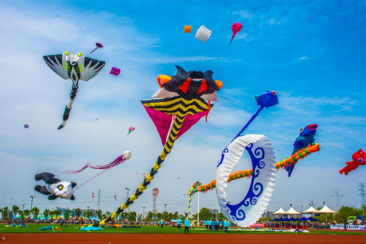
There are various types of sports kites
In addition to the relatively easy to control double line kites, there are also four line, multi line and other sports kites.
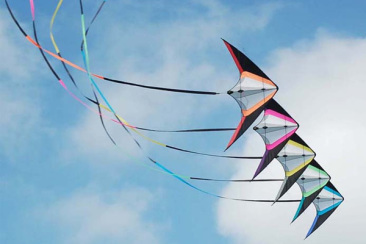
The gameplay of sports kites is also different from traditional kites
It can fly alone, allowing it to freely rotate up and down, left and right, and even pose the kite in windless conditions.

The Development History of Kite Culture
Mozi (Mozi Zhai) passed on the kite making business to his student Lu Ban (also known as the Public Transport Class).
Contact Us
TEL: 86-13964609657
WhatsApp:86-13964609657
ADD:Room 106, Building 5, Weifang Jiashi Incubation Industrial Park, No.5888 Dongwaihuan Road, Hanting District, Weifang City, Shandong Province


Consult Now
Welcome to leave a message, we will contact you in time!