


Blog
The method of making a regular kite
The general method for making a regular kite is to use bamboo as the skeleton, paper as the meat, and other composite materials such as silk, nylon cloth, plastic film or bamboo strips, gauze strips, horse drawn paper, etc.
Paper and silk are commonly used materials for traditional kite making, with bright and colorful colors that better reflect the charm of Chinese kites; But paper is fragile and silk is expensive, and modern science products such as nylon cloth and plastic film have become new materials for making kites.
Bamboo is the main material for making kite skeletons. Bamboo with a wall thickness of 3-5 centimeters can be cut into bamboo pieces, and the toughness of the bamboo pieces can be used to make the kite skeleton. The skeleton of a kite can be customized according to personal preferences, such as dragonfly shaped, butterfly shaped, etc.
Paper is the main material of a frosted kite, with thin fibers that are long and uniform, resilient, moisture and impact resistant, and have a white and clean color. Stick the paper on the skeleton, then tie the string, and the kite is ready.
At this time, you can also paint your favorite colors on the prepared kite, decorate it with lace, or tie a ribbon and hang a paper ring. Although a moderate amount of accessories cannot affect the kite's flight in the air, too many accessories can cause the kite to fly unevenly. Most modern kites use advertising cloth as the fabric, and the skeleton has changed from bamboo to charcoal poles, greatly improving the flying effect.
RELATED NEWS
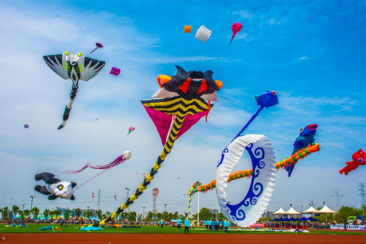
There are various types of sports kites
In addition to the relatively easy to control double line kites, there are also four line, multi line and other sports kites.
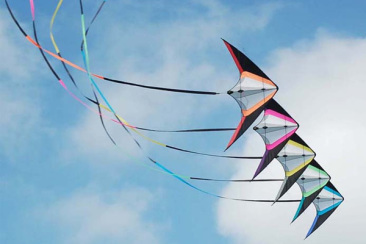
The gameplay of sports kites is also different from traditional kites
It can fly alone, allowing it to freely rotate up and down, left and right, and even pose the kite in windless conditions.

The Development History of Kite Culture
Mozi (Mozi Zhai) passed on the kite making business to his student Lu Ban (also known as the Public Transport Class).
Contact Us
TEL: 86-13964609657
WhatsApp:86-13964609657
ADD:Room 106, Building 5, Weifang Jiashi Incubation Industrial Park, No.5888 Dongwaihuan Road, Hanting District, Weifang City, Shandong Province


Consult Now
Welcome to leave a message, we will contact you in time!